Physical Address
304 North Cardinal St.
Dorchester Center, MA 02124
Physical Address
304 North Cardinal St.
Dorchester Center, MA 02124


Wealth management, formerly the responsibility of the ultra-rich and delivered through in-person meetings, is undergoing a seismic shift. The emergence of advanced technology not only facilitated broader access to financial services but has also fundamentally transformed their delivery, management and use.
Technology is shifting the industry from legacy, manual systems toward a data-driven, effective and personalised future. This article will examine how technology is transforming today’s wealth management industry, from the automation of basic tasks to providing a more transparent and secure client experience.
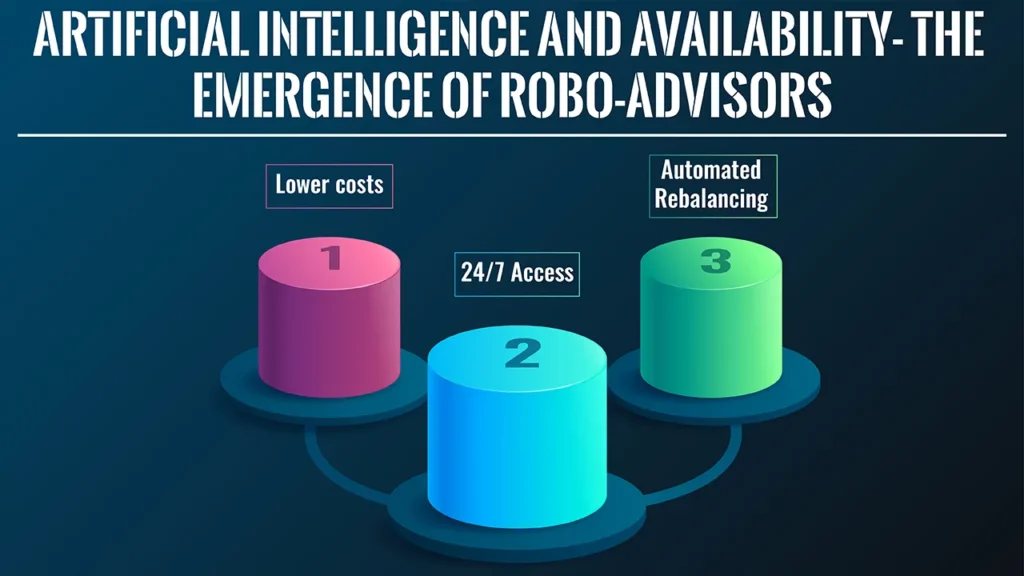
Perhaps the most readily apparent sign of tech changes is the rise of robo-advisors. These are digital platforms that employ algorithms to offer computerised, low-cost financial advice and portfolio management.
Clients can fill out a questionnaire, rather than relying on a human advisor, to give details about financial goals, risk tolerance and time frame. It then builds and maintains a diversified portfolio for them.
Technology has provided financial advisors and clients with a degree of data and analytical power that would have been unthinkable even a decade or two ago. Algorithms and AI can handle large volumes of data in real time and provide deep insights that help us make better decisions.
Contemporary clients want a smooth, customised and potentially on-demand experience akin to what they already receive from other digital services, such as streaming platforms or e-commerce sites. Wealth managers can use technology to fulfil each of these needs and offer a tailored experience accordingly.
Now more than ever, security is the top concern in a world which is more fraught with cyber threats. Technology has a paradoxical role here: it creates new vulnerabilities while also offering the most potent tools for fighting them.
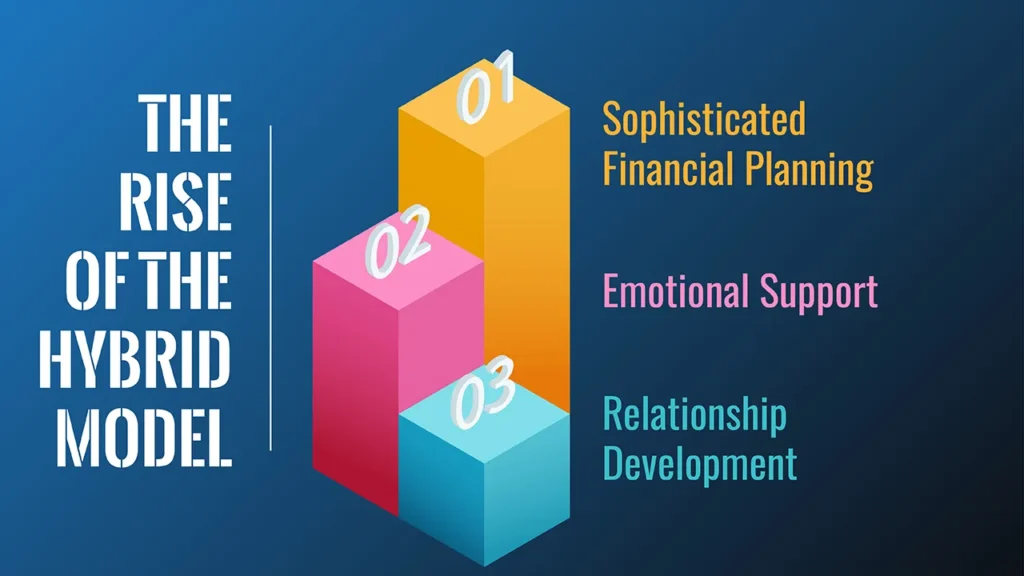
Technology has given life to the robo-advisors but not killed the human advisor. In its place has emerged the hybrid wealth management model.
In this structure, technology is automating the mundane administrative tasks (like data entry and rebalancing) and managing straightforward investment questions. This means the human advisor is liberated to concentrate on higher-value tasks like:
The hybrid nature combines the best of both worlds, as it not only leverages the effectiveness and convenience of technology, but it also taps into the empathy and expertise of a human professional.
The importance of technology to today’s wealth management is not on the verge of a decline; it’s a profound change that has already occurred. Wealth management is shifting from being an exclusive and expensive service to becoming increasingly inclusive, transparent and efficient, driven by technological developments.
Using automation, data analytics and better security, advisors can make better decisions, and clients can feel more secure and in control of a sound financial future. The digitisation of finance is indeed a golden age for finance professionals as well as their investors.
A robo-adviser is a series of algorithmic-based choices to create a custom portfolio at a reduced cost, with minimal human contact.
A traditional adviser is a human adviser who is capable of providing holistic, bespoke advice across multiple aspects of your finances.
Not entirely. Technology can automate many aspects of the process, but it can’t mirror the human touch of empathy, nuanced problem-solving and emotional support, particularly in many high-stress financial situations.
It seems to me that the future is probably some sort of hybrid model in which tech enables the advisory role rather than eliminating it.”
Legitimate digital wealth management platforms invest heavily in bank-grade security features such as sophisticated encryption and multi-factor authentication to secure your data.
Typically, your investments are also insured by organisations like the SIPC (Securities Investor Protection Corporation).
Technology significantly diminishes the operational costs of a company by automating the manual work. Then it passes the savings on to customers in the form of reduced fees and account minimums, allowing all to have access to financial advice.