Physical Address
304 North Cardinal St.
Dorchester Center, MA 02124
Physical Address
304 North Cardinal St.
Dorchester Center, MA 02124


In a highly convoluted insurance landscape, companies are exposed to huge risks that may ultimately compromise their sustainability. That is where reinsurance comes in.
Reinsurance is how insurers can take some of the risk they have on their books and pass it on to another company to ensure that that insurer has a stable balance sheet and can maintain solvency so customers can continue to count on a certain level of security.
Knowing which reinsurance strategy is the right fit is key for insurers who want growth and sustainability in this new economic and regulatory environment we all live in today.
This article looks at the basics of reinsurance, critical components in developing a successful reinsurance strategy, insurers’ options to choose from when developing such strategies and tips on how they can begin crafting a strategy tailored to their own particular challenges.
Reinsurance is insurance for the insurance companies. Like individuals and businesses that buy insurance to cover financial losses from unexpected disasters, insurance companies themselves buy protection on the market – reinsurance.
This serves to more evenly distribute risk across the industry so that no single insurer is holding an unmanageable burden.
An intelligent reinsurance tactic helps insurers in:
The selection of the proper reinsurance strategy has a bearing on all parts of the insurance business. Without it, businesses can go bankrupt during major catastrophes, lose competitiveness or spend years trying to satisfy regulatory mandates. Effective planning supports:
For this reason, there is no alternative to this reinsurance approach, and it must be seen as the basis of a sustainable insurance business.
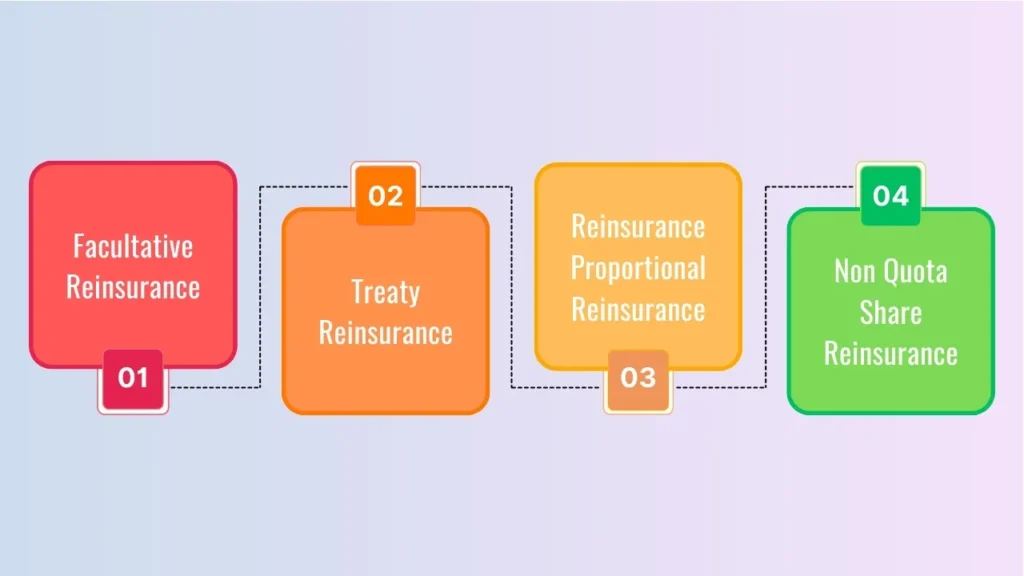
Types of reinsurance and understanding it Before we design a strategy, insurers need to know distinct types of reinsurance.
Successful implementation of a reinsurance strategy requires assessment and consideration of several factors:
A portfolio’s nature must be taken into account by any insurer. For example, a company that underwrites property insurance in disaster-prone regions will need robust catastrophe reinsurance.
Solvency Capital Standards are established in every jurisdiction. A reinsurance plan should be in accordance with these rules to be compliant.
Reinsurance should be used by companies to achieve the most efficient capital structure, allowing surplus funds to be released and enabling growth without gross loss.
Reinsurance pricing and capacity are based on world events, interest rates, and catastrophe history. A mechanism should be able to accommodate this variability.
Insurers are also seeking disparate outcomes in the market as well: some want to grow aggressively by writing more business, while others are focused on stable profitability. The appropriate reinsurance programme will be in line with these objectives.
Selecting a reinsurance approach is about trade-offs between risk tolerance, cost and strategic direction. Some commonly adopted approaches include:
| Reinsurance Approach | Key Features | Advantages | Best Suited For |
|---|---|---|---|
| Conservative Protection | High reliance on reinsurance, low risk retention | Capital stability, reduced financial strain | Insurers prioritizing solvency and risk avoidance |
| Growth-Oriented | Higher retention with selective protection | Increased capacity, premium growth | Expanding insurers entering new markets |
| Hybrid | Balanced use of proportional and non-proportional structures | Protection with growth flexibility | Companies seeking resilience and expansion |
Such challenges underscore the critical importance of continuing monitoring and key partnerships with approved reinsurers.
The reinsurance environment is evolving rapidly, driven by climate change, digitalisation and global economic instability. Parametric reinsurance, where pay-outs are based on pre-defined indices rather than loss assessment, is one of a range of innovative products that insurers are turning to. What’s more, capital market plays such as catastrophe bonds are increasingly part of larger reinsurance.
The Winners of Tomorrow’s Insurance Industry Will Be Those Who See Reinsurance Strategy Not as a Cost Management Exercise, but as an active risk management lever tuned to the long term.
The ultimate aim is to shield insurers from significant adverse variance, maintain solvency and foster predictable growth.
Insurance provides protection to businesses and individuals; reinsurance protects insurance companies by dispersing their risk.
Non-proportional covers, especially excess-of-loss reinsurance, have become most common for cat events.
Once a year is good, but to be better, do it after each major regulatory change.
Indeed, growth reinsurance positions insurers to expand underwriting capabilities and enter new territories with a manageable level of risk.