Physical Address
304 North Cardinal St.
Dorchester Center, MA 02124
Physical Address
304 North Cardinal St.
Dorchester Center, MA 02124


Have you ever looked at the word “indemnity” in a contract or in an insurance policy and thought: What’s really behind this?” Indemnity is more than a legal concept – it is also a fundamental basis of financial protection, whether in law or contract.
This guide will do things like help take “indemnity” out of the mystery black box and explain “what it means in insurance and the law”, get to its “core principles”, show you how it actually “works in the wild” and explain why it’s important for fair dealings and being able to sleep at night without waking up in a cold sweat thinking someone has taken out a second mortgage on your dog.
Core Meaning:
In general insurance terminology, indemnity (from Latin ‘indmenis’, meaning ‘unhurt’, ‘uninjured’ or ‘damage’) is an agreement whereby a party (indemnitor) promises to compensate for the loss or harm sustained by another party (indemnitee).
The “Making Whole” Principle:
Recover should place the indemnitee (the party who is indemnified) in the same economic position as before the loss or damage and may neither enrich nor impoverish the indemnitee.
Distinction from Guarantee:
A guarantee is for the purpose of assuring the performance of a third party, whereas indemnity relates to making good a loss.
Core Principle: Indemnity is based on the principle that an insurance contract is signed to indemnify (pay back or make whole) the insured in the event of the loss. The insured can receive only the actual amount of the loss.
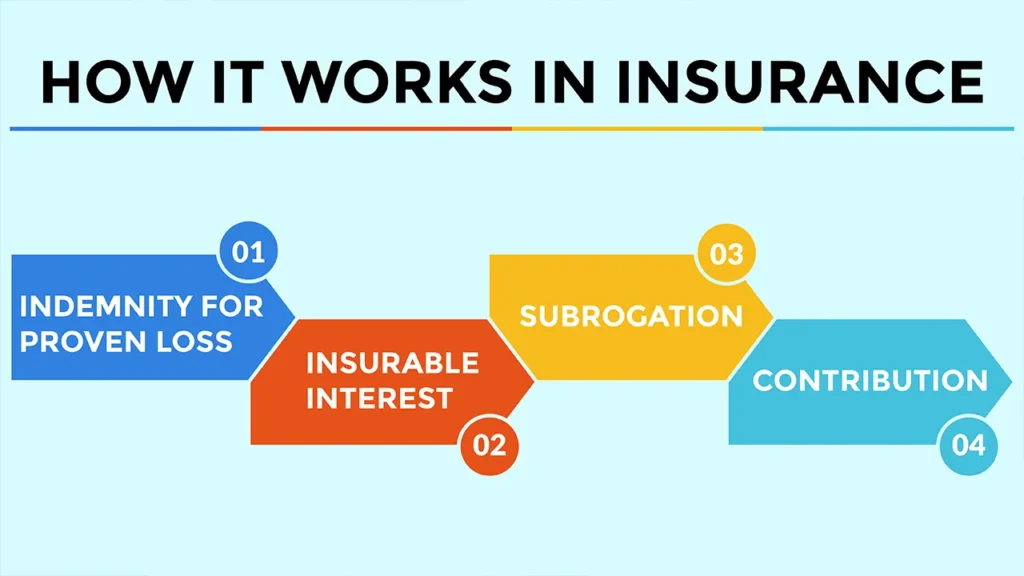
Indian Insurance Scenario: Concepts of indemnity and subrogation form an integral part of Indian insurance law and practice, and there is no ambiguity in the insurance law with regard to the principles of fairness to form the basis of claims settlement being laid down under the insurance acts. For details on the principle of indemnity in Indian insurance, refer to this legal overview by iPleaders.
Definition: A contract provision in which one party (usually person) agrees to assume a product’s future liability What It Means: A (contractual) provision under which one party (the indemnifying party) agrees to take on certain liabilities of the other party (the indemnified party) under particular circumstances.
Importance: Indemnity clauses allocate risk between parties, promote legal certainty, and may limit exposure.
In conclusion, indemnity is an important principle that we certainly will understand and can use to do the following: be fair to those injured place the risk with the appropriate party, and offer financial protection that is essential.
It performs an “insurance” role by breaking the link between loss and profit so that insurers can subrogate, and it is widely used “in law” through contracts and statutes. Indemnity is so much more than a word—it is a critical concept that serves as the power behind equity and is a critical component of addressing and assigning the risk and important financial protection.
By comprehending its intricacies, people and businesses are able to take better control of risks, protect their assets, and do business with more confidence in an uncertain world.
Check your insurance and legal coverage for indemnity clauses, and get professional help if necessary to ensure you are covered.
They’re related, though not exactly the same. Compensation Compensation is a term that refers to payment for loss or injury.
Indemnities refer to making an injured party whole by restoring them to the financial condition they were in prior to the loss (no more, no less). Indemnity is compensation, but it also makes one whole again.
No. Insurance’s principle of indemnity operates to ensure that you do not make a profit from a loss.
The insurer will pay you only to the extent of the financial loss you actually sustained, up to the limits of your policy: you are to be “made whole”, not better off than you were to begin with.
An indemnity clause is a clause in a contract in which one party agrees to secure the other against the potential loss or damage that may be incurred in the future due to the user’s behaviour.
It’s employed to shift risk from one party to another, and it delineates who pays for certain types of claims or liabilities in a business agreement.